Buying a flat in Hubballi (Hubli) from Dubai, Singapore or New Jersey is the same purchase a resident makes, with three extra layers: foreign exchange rules from the Reserve Bank of India (RBI), tax rules that treat you as a non-resident, and the practical problem of not being here. This guide walks through each step in order. For a one-page summary of the rules, see our NRI page.
One change to note first: the Income-tax Act, 2025 replaced the 1961 Act from 1 April 2026. Familiar references such as section 194-IA, section 195, Form 26QB and Form 15CA now have new numbers, and this guide uses the new ones.
Before you start: settle three things
- Your status. NRIs and OCI cardholders can buy residential and commercial property in India; neither can buy agricultural land, farm houses or plantation property. Citizens of Pakistan, Bangladesh, Sri Lanka, Afghanistan, China, Iran, Nepal, Bhutan, Macau, Hong Kong and North Korea need the RBI's prior permission, though the RBI says this does not apply to OCIs.
- Where the money comes from. Payment has to come through banking channels — a fresh remittance or your NRE, FCNR(B) or NRO account — never traveller's cheques or foreign currency notes. Paying in foreign exchange through the bank keeps the simplest route open for sending sale money back out later.
- Your person on the ground. Decide early who in Hubballi will visit the site, collect papers and, if needed, hold your power of attorney.
Step 1: Shortlist from abroad
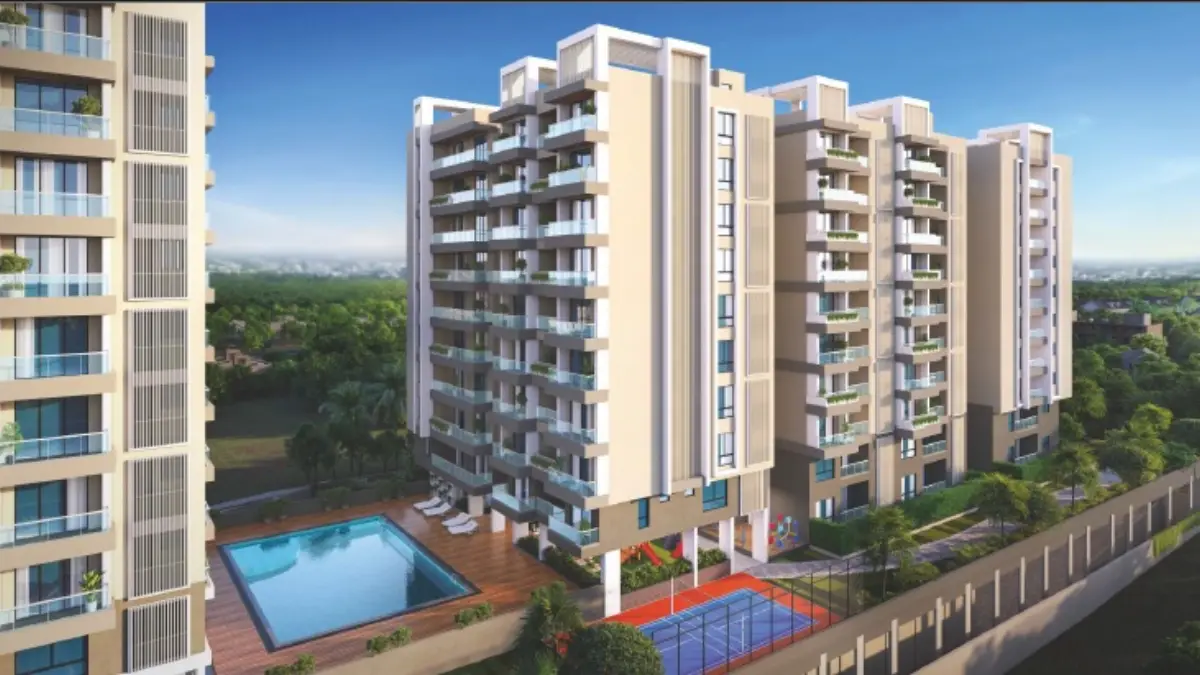
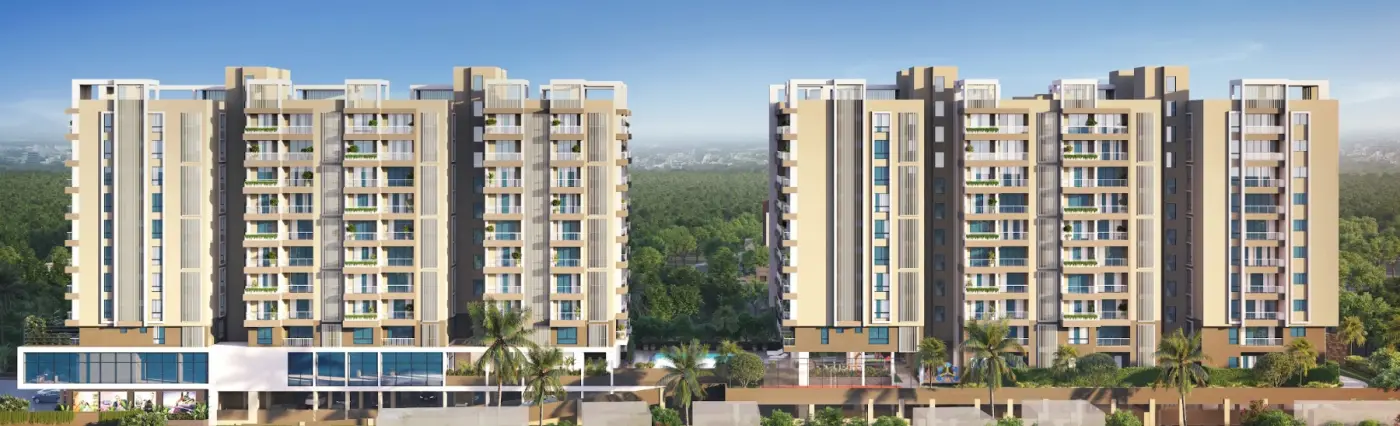
Start with floor plans and sizes. Shriya's ongoing projects publish super built-up areas: Shriya Lake View by Unkal Lake has 2, 3 and 4 BHK homes from about 1,335 to 2,163 sq.ft, and Shreya Serenity off Gokul Road has 3, 4 and 5 BHK homes from about 2,033 to 5,512 sq.ft. Ask for the carpet area of the exact unit too — our explainer on carpet, built-up and super built-up area shows why the numbers differ.
Several Serenity units have walk-throughs you can open from the floor plans, and our team can walk any home on a video call at a time that suits your time zone. If a family member can visit, give them our site visit checklist.
Step 2: Verify before you pay anything
Look the project up on rera.karnataka.gov.in yourself rather than relying on a brochure. Shreya Serenity is PRM/KA/RERA/1259/479/PR/130525/007734 and Shriya Lake View is PRM/KA/RERA/1259/479/PR/060324/006680. Our guides on checking a RERA project and the documents to ask for cover what to look at.
Step 3: Book, and deduct TDS from the first payment
When you buy from a resident seller — a builder is one — for ₹50 lakh or more, you as the buyer must deduct 1% of the price or the stamp duty value, whichever is higher. The rule is now in section 393(1) of the Income-tax Act, 2025 (Table, Sl. No. 3(i)) and the deduction is reported with Form 141, which replaced Form 26QB. Tax is due when each payment is made, so for a flat paid in instalments you deduct on every instalment.
A simple example: on a ₹1 crore flat, a ₹10 lakh booking payment means ₹9.9 lakh to the builder and ₹10,000 deposited as TDS. Ask your bank for the remittance advice on every transfer and keep it with the receipt; that paper trail matters later.
Step 4: Arrange the home loan, if you need one
The RBI's Master Direction on rupee lending to NRIs (updated September 2026) lets banks and NHB-approved housing finance companies lend to NRIs and persons of Indian origin for a home in India. The amount, margin and tenure are at par with resident loans, and the loan is secured by a mortgage on the flat. Repayments can come from remittances, from your NRE, FCNR(B) or NRO account, or from the flat's rent, and a relative in India can pay into your loan account. The loan cannot be credited to your NRE or FCNR(B) account; it goes to the purchase. Expect to show your passport, proof of overseas employment and income, and bank statements, and check the EMI on our calculator.
Step 5: Give a power of attorney if you won't be here
Registration needs the buyer, the seller and two witnesses at the sub-registrar's office, so if you can't fly in, someone must sign for you.
- Keep it specific. A power of attorney limited to this flat — booking, agreement, loan papers and registration — is safer than a general one.
- Have it drafted in Hubballi. A local lawyer knows what the sub-registrar will accept.
- Sign it properly abroad. It is usually attested at an Indian embassy or consulate, or notarised and apostilled in Hague Convention countries.
- Stamp it in time. Once it reaches India it has to be presented for stamping in Karnataka within three months; after that it can be impounded and a penalty charged.
Step 6: Register the flat
The deed, the stamp duty and the appointment are prepared on Karnataka's Kaveri 2.0 portal. On the day, the parties and witnesses give photographs and thumb impressions at the sub-registrar's office.
Stamp duty is the same for NRIs as for residents: 5% stamp duty, a 2% registration fee (doubled from 1% on 31 August 2025) and about 0.6% in cess and surcharge. On a ₹1 crore deed that is roughly ₹5 lakh, ₹2 lakh and ₹60,000 — about ₹7.6 lakh in all. Our stamp duty guide has the detail. After registration, have the municipal records and the electricity account moved into your name.
Step 7: Take possession, then let it if you wish
A family member can do the handover inspection with you on a video call. If you rent the flat out, the rent is taxable in India; your tenant must deduct tax at the rates in force under section 393(2) (Table, Sl. No. 17), the successor to the old section 195. The RBI treats current income like rent as a permitted credit to your NRE account, and current income in an NRO account can be sent abroad. File an Indian return each year to settle the tax properly.
Step 8: When you sell
- The tax. Held for more than 24 months, the flat is a long-term asset and the gain is taxed at 12.5% without indexation under section 197. The choice of 20% with indexation for property bought before 23 July 2024 is written for resident individuals and HUFs, not NRIs.
- The buyer's TDS. Your buyer deducts tax under section 393(2) (Table, Sl. No. 17). Apply early to the Assessing Officer for a lower or nil deduction certificate under section 395(1) so the deduction matches the tax actually due.
- Reinvesting. Section 82 lets an individual cut or remove tax on a long-term gain from a house by buying another residential house in India within one year before or two years after the sale, or building one within three years.
- Sending money out. Sale proceeds of up to two residential properties can be repatriated if they were bought under the foreign exchange rules, and the RBI allows up to USD 1 million per financial year. The bank will want Form 145 (formerly 15CA) and, for taxable remittances above ₹5 lakh a year, a chartered accountant's Form 146 (formerly 15CB).
Common mistakes to avoid
- Paying any part of the price in cash or foreign currency notes.
- Forgetting the 1% TDS on instalments after the first.
- Signing a broad general power of attorney instead of one tied to the flat.
- Letting a power of attorney sit for more than three months before stamping.
- Assuming the 20%-with-indexation option will be available at sale.
This is general information, not legal or tax advice. Rules change; confirm with your bank and a chartered accountant before each step.
Sources
- FAQ: Purchase of Immovable Property (updated 6 April 2023) — Reserve Bank of India, accessed 26 November 2026
- FAQ: Accounts in India by Non-residents (updated 16 January 2025) — Reserve Bank of India, accessed 26 November 2026
- Master Direction – Borrowing and Lending transactions in Indian Rupee between Persons Resident in India and NRIs/PIOs (updated 8 September 2026) — Reserve Bank of India, accessed 26 November 2026
- Income-tax Act, 2025 — section 393 (TDS) — Income Tax Department, accessed 26 November 2026
- TDS due dates, Form No. 141 (Income-tax Rules 2026) — Income Tax Department, accessed 26 November 2026
- Income-tax Act, 2025 — section 395 (certificates for lower deduction) — Income Tax Department, accessed 26 November 2026
- Income-tax Act, 2025 — section 197 (tax on long-term capital gains) — Income Tax Department, accessed 26 November 2026
- Income-tax Act, 2025 — section 82 (profit on sale of property used for residence) — Income Tax Department, accessed 26 November 2026
- TDS on purchase of immovable property (section 194-IA, Income-tax Act, 1961) — Income Tax Department, accessed 26 November 2026
- Selling a property this year? Why the new 12.5% capital gains tax may not always reduce your tax bill (22 Jul 2026) — Business Today, accessed 26 November 2026
- New tax declaration forms introduced for NRI remittances (Forms 145 and 146) — BDO India, accessed 26 November 2026
- Karnataka: Property deals to cost more, registration fee hiked to 2% (30 Aug 2025) — Deccan Herald, accessed 26 November 2026
- How to book online appointments for property registration in Karnataka — Housing.com News, accessed 26 November 2026
- Power of attorney in Karnataka (NRI execution, stamping within three months) — Landeed, accessed 26 November 2026
Written by the Shriya Properties team in Hubballi and checked against the sources above on 26 November 2026. Rules, rates and prices change — confirm the current figures before you decide. Spotted something out of date? Tell us.
Questions buyers ask
Do NRIs need RBI permission to buy a flat in Hubballi?
No, not for an NRI or OCI buying residential or commercial property. Prior RBI permission is needed only for citizens of a listed set of countries, and the RBI says that restriction does not apply to OCIs.
Is TDS deducted on every instalment of an under-construction flat?
Yes. If the total price is ₹50 lakh or more, the 1% TDS under section 393(1) of the Income-tax Act, 2025 applies when each payment is made, and each deduction is reported with Form 141.
How long do I have to stamp a power of attorney signed abroad?
Present it for stamping in Karnataka within three months of it reaching India. After that it can be impounded and a penalty charged, so send it soon after signing.
Can an NRI use indexation when selling property bought before July 2024?
No. Under section 197 of the Income-tax Act, 2025, the choice of 20% with indexation for land or buildings bought before 23 July 2024 is for resident individuals and HUFs. NRIs pay 12.5% without indexation on long-term gains.
Which forms do I need to send sale money abroad?
From 1 April 2026, Form 145 replaces Form 15CA and Form 146, a chartered accountant’s certificate, replaces Form 15CB. Form 146 is needed for taxable remittances above ₹5 lakh in a year.