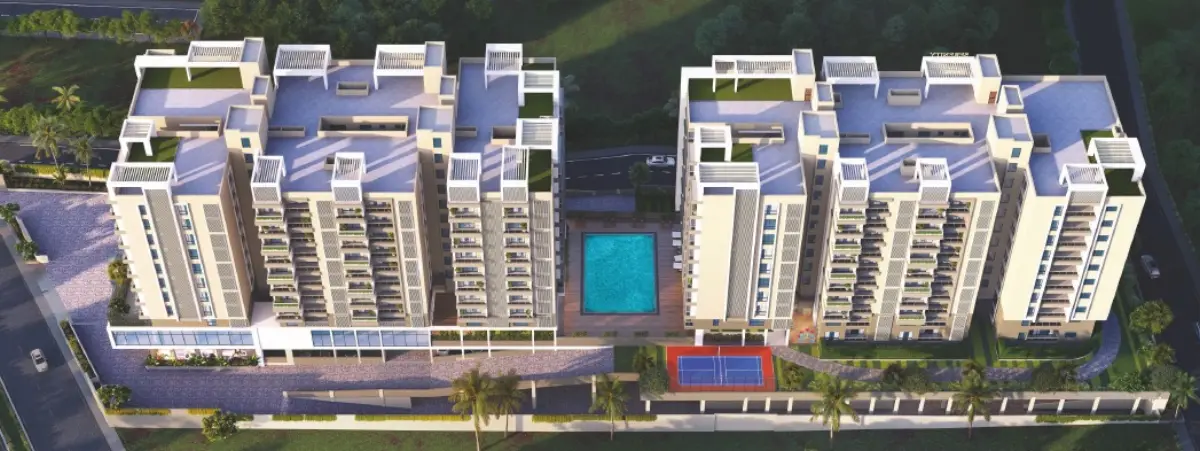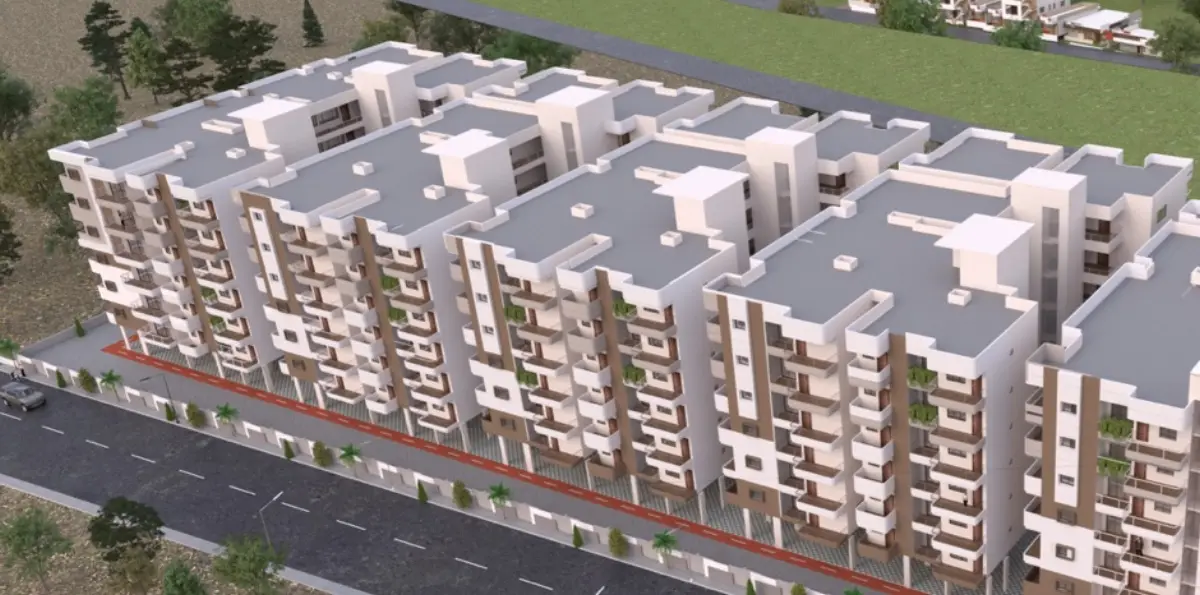
Every buyer in Hubballi (Hubli) and Dharwad eventually faces this choice. A ready-to-move flat is finished: you can walk through it, check it and move in. An under-construction flat is bought from plans and a site, with payments spread over the build, and you move in later. Neither is always better. The right answer depends on how soon you need the home, how much risk you can carry and how the numbers work for you.
The short version
| Ready-to-move | Under-construction | |
|---|---|---|
| GST | None, if you pay the whole price after the completion certificate | 5%, or 1% for an affordable flat |
| Stamp duty and registration | About 7.6% in Karnataka for most flats | Same, paid when the sale deed is registered |
| What you see before paying | The actual flat | Plans, a sample flat, the site |
| Delivery risk | None | Depends on the builder; RERA gives remedies |
| Payments | Mostly at once | Spread over construction stages |
| Choice of unit | Whatever is left | Wider choice of floor, facing and size |
| Rent while waiting | None | You may pay rent and loan interest together |
| Home loan tax benefits | Start in the year you move in | Pre-construction interest is claimed later in instalments |
Cost: GST is the big difference
When you buy a flat that is still being built, you pay GST on what you pay the builder. When you buy a finished flat and the entire price is paid after the completion certificate (or first occupation, whichever is earlier), there is no GST (GST notification, item (ia)). Stamp duty and registration apply either way.
Worked example: a ₹75 lakh flat in Hubballi.
| Under construction | Ready, paid after completion certificate | |
|---|---|---|
| Price | ₹75,00,000 | ₹75,00,000 |
| GST (5%) | ₹3,75,000 | nil |
| Stamp duty, cess, surcharge and registration (7.6%) | ₹5,70,000 | ₹5,70,000 |
| Total outlay | ₹84,45,000 | ₹80,70,000 |
The under-construction flat costs ₹3.75 lakh more in tax at the same price. It is only cheaper overall if the builder's price for it is lower by more than that, or if the staggered payments are worth more to you. The duty figure assumes the price is not below the guidance value; see the stamp duty guide. For GST rules on parking, location charges and affordable flats, see GST on flats.
Risk: what can go wrong, and what RERA does about it
The main risk with an under-construction flat is delay, and less often a project that stalls. The Real Estate (Regulation and Development) Act, 2016 was written for exactly this (Act text):
- The builder declares a completion date when registering the project. If possession is late, section 18 lets you withdraw with a refund and interest, or stay and receive interest for every month of delay.
- Section 4(2)(l)(D) requires 70% of buyers' money to be kept in a separate account for the project's construction and land costs.
- Section 13 bars the builder from taking more than 10% of the price before a registered agreement for sale.
- Section 11 requires quarterly updates on the project's status, which you can read on the Karnataka RERA portal.
These remedies help, but a refund with interest is not the same as a home on time. Your best protection is choosing a builder who delivers. Our guide on how to check a RERA project shows how to compare a builder's promised dates with what actually happened.
A ready flat removes delivery risk but has its own checks. Confirm the occupancy certificate, a clear title and EC, an e-khata, and that the property tax and association dues are paid; see the documents checklist. A flat bought from the builder still carries a five-year defect liability from the date of possession under section 14(3).
Money flow: rent, pre-EMI and tax
With an under-construction flat bought on a loan, the bank pays the builder in stages and you pay interest on what has been released. If you rent meanwhile, you carry rent and loan interest together until you move in. Add that up for the expected construction period before comparing prices.
The tax treatment also differs. Under the old regime, interest on a home you live in is deductible up to ₹2 lakh a year once the house is complete. The interest you paid during construction is claimed afterwards in five equal yearly instalments, and from tax year 2026-27 those instalments count within the same ₹2 lakh limit (Income-tax Act, 2025, section 22). If construction is completed more than five years after the end of the tax year in which you borrowed, the limit falls to ₹30,000. Our home loan tax guide explains this in full.
With a ready flat, your EMI starts at once, but so do the tax benefits and the saving on rent.
Choice and quality
Buying early usually gives you the widest choice: the floor you want, the facing, a corner unit, parking near the lift. It also lets you watch the building go up. If you visit at each stage, you see the structure, the steel and the waterproofing before they are hidden behind plaster and tiles. Some builders allow small layout changes early on.
With a ready flat, what you see is what you get. That is a real advantage: you can check light, ventilation, noise, water pressure and finish quality in person, which no brochure can show.
Which suits you
A ready-to-move flat suits you if:
- You need to move within months, for a school year, a job or a family reason.
- You are paying high rent and cannot carry rent and EMI together.
- You want no delivery risk at all.
- You want the tax benefits of a home loan to start straight away.
An under-construction flat suits you if:
- You can wait for the construction period and can carry rent and loan interest meanwhile.
- You want a specific unit, floor or facing in a new project.
- You prefer paying in stages over the construction period.
- The builder has a record of delivering on time that you have checked yourself.
A Hubballi example
Shriya's two ongoing projects are under construction and both are RERA-registered: Shreya Serenity on Gokul Road, a new launch of 3, 4 and 5 BHK homes, and Shriya Lake View by Unkal Lake, 2, 3 and 4 BHK homes on the Hubballi–Dharwad BRTS road. For buyers who want a finished home, Shriya's team can tell you about resales in its completed projects, such as Shriya Shivshakti Avenue (2026) and Shriya Lumbini (2023). The same checks in this guide apply to every project, ours included.
Before you decide
- Write down the all-in cost of each option, including GST, stamp duty, parking and maintenance deposits.
- For an under-construction flat, add rent and pre-EMI interest for the expected build period, plus a margin for delay.
- Check the builder's RERA completion dates against its past record.
- For a ready flat, see the occupancy certificate and e-khata before you pay anything substantial.
Sources
- Notification No. 11/2017-Central Tax (Rate), as amended up to 1 April 2019 (consolidated) — GST Council, accessed 26 November 2026
- Real Estate (Regulation and Development) Act, 2016 — Act text — Haryana Real Estate Regulatory Authority, accessed 26 November 2026
- Income-tax Act, 2025 — Section 22: Deductions from income from house property — Taxsutra, accessed 26 November 2026
- Property registration fee increased from 1% to 2% of overall value — Star of Mysore, accessed 26 November 2026
Written by the Shriya Properties team in Hubballi and checked against the sources above on 26 November 2026. Rules, rates and prices change — confirm the current figures before you decide. Spotted something out of date? Tell us.
Questions buyers ask
Is GST payable on a ready-to-move flat?
No, if the entire price is paid after the completion certificate is issued or after first occupation, whichever is earlier. Under-construction flats attract 5% GST, or 1% if they qualify as affordable.
Is an under-construction flat cheaper than a ready flat?
The base price is often lower, but GST adds 5% and you may pay rent and loan interest while you wait. Compare the all-in cost; on a ₹75 lakh flat, GST alone is ₹3.75 lakh.
Can I claim tax benefits on an under-construction flat?
Not during construction. Once it is complete, under the old regime you claim the interest paid during construction in five equal yearly instalments, within the ₹2 lakh limit for a self-occupied home.
What happens if the builder delays possession?
Under section 18 of the RERA Act you can withdraw and get your money back with interest, or stay and receive interest for every month of delay until possession.
Which documents prove a flat is ready to move in?
The occupancy certificate from the local authority and the completion certificate. Also check the e-khata, the encumbrance certificate and that property tax and association dues are paid.