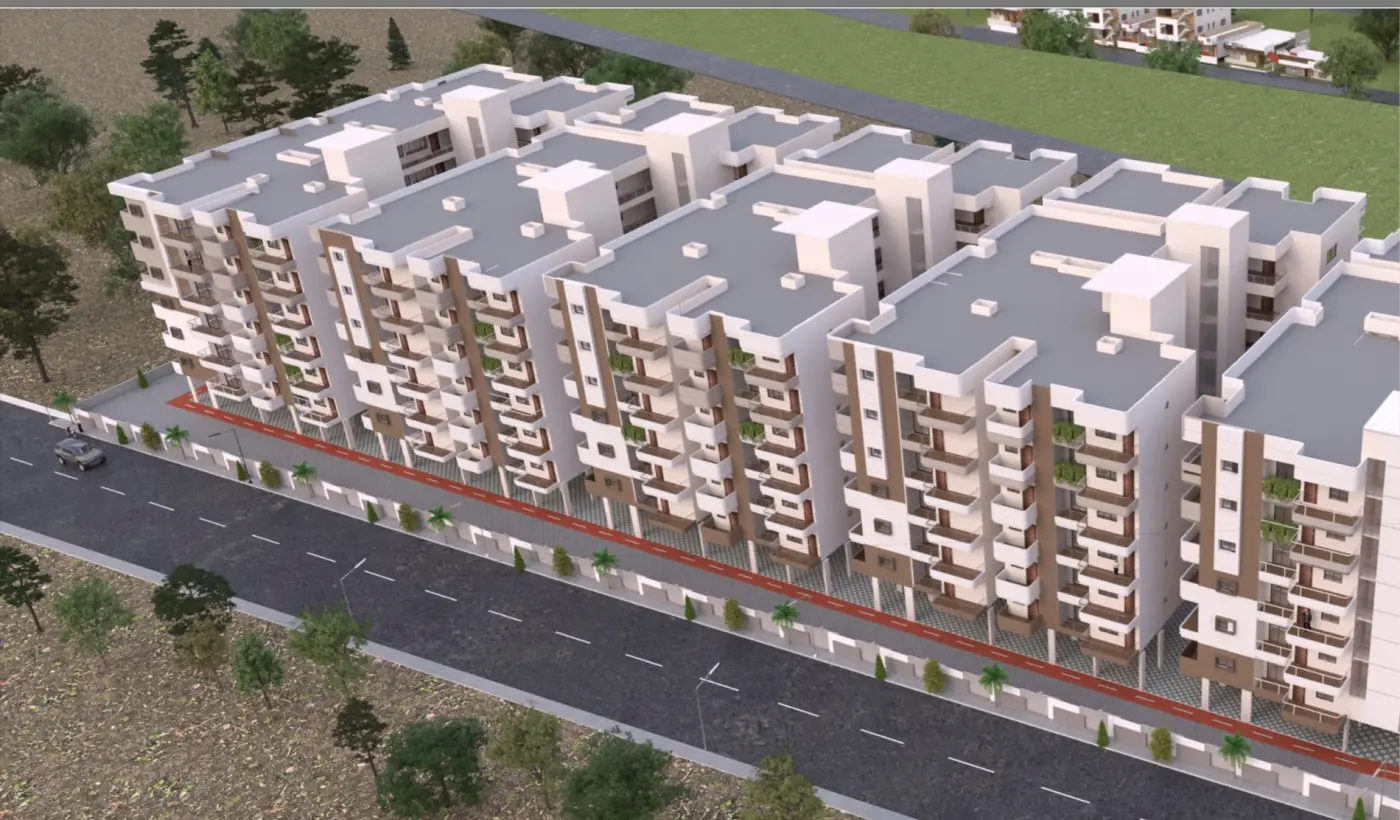
Every agricultural survey number in Karnataka has an RTC, short for Record of Rights, Tenancy and Crops, and locally called the pahani. It is kept by the Revenue Department on the Bhoomi system and shows who holds the land, how much of it there is, who cultivates it and what rights or liabilities are recorded against it. If you are buying a plot near Hubballi (Hubli) or Dharwad, the RTC is a primary document. If you are buying a flat, it still matters: almost every apartment in the twin cities stands on land that was once farmland, and the RTC is where that land's history starts.
This guide explains what the RTC shows, the mutation register (MR) behind it, how to view it, what it cannot prove, and how a flat or plot buyer should use it. For the full set of papers, see our property documents checklist.
What the RTC shows
The RTC combines the record of rights with tenancy and crop details for each survey number and sub-division (hissa). A property-law commentary on how it is prepared describes two groups of columns: the first eleven hold details that rarely change, such as the survey number, area, assessment, soil type, sources of irrigation, trees, the holders and their rights and liabilities, while columns 12 and 13 hold seasonal details such as tenancy, land use and crops (SBN Property Laws). Kotak Mahindra Bank's guide lists what you see on the portal as the owner's name, tenancy, crop details, land area and land use (Kotak).
| Part of the RTC | What to look for |
|---|---|
| Survey number and hissa | Matches the title deeds and the conversion order exactly |
| Extent (area) | Matches the deeds; usually in acres and guntas |
| Holder's name | Matches the seller, or the landowner in a joint development |
| Rights and liabilities | Loans, government restrictions or other entries against the land |
| Tenancy and cultivation | No tenant or cultivator with a claim |
| Kharab | Any unusable land within the survey number |
Kharab land matters. A recent law-firm note on the 2025 changes to the Karnataka Land Revenue Rules explains that "A" kharab land (rocky patches, farm buildings, threshing floors) belongs to the holder only on an explicit government grant or confirmation, while "B" kharab land (roads, tanks, grazing land) always belongs to the state (Cyril Amarchand Mangaldas, November 2025). A plot or building on B-kharab land is a serious problem; such land is also excluded from the 2026 B-khata to A-khata route.
The mutation register (MR)
The RTC changes through mutations. Under the Karnataka Land Revenue Act, 1964, a record of rights is kept for every village (section 127), a person who acquires a right in land must report it to the village officer within three months (section 128), and every such report is entered in the Register of Mutations (section 129). Objections go into a register of disputed cases, and an entry is carried into the RTC only after it is certified (SBN Property Laws).
So when you read an RTC, also read the MR entries that produced it. Each one should point to a document: a registered sale, a partition, an inheritance after a death, a court order. An MR without a document behind it, or a change of holder that does not match the title deeds, needs explaining.
What the RTC cannot prove: title
The RTC is a revenue record. It records who is liable to pay land revenue; it does not decide who owns the land. The Supreme Court has repeatedly said that mutation in revenue records neither creates nor extinguishes title, has no presumptive value on title, and only enables the person in whose favour it is made to pay the land revenue (LiveLaw, February 2019).
That is why your advocate reads the RTC alongside the registered deeds, the encumbrance certificate and the other records, as part of a full title verification.
How to view or download an RTC
The official portal is the Revenue Department's Bhoomi land records site (landrecords.karnataka.gov.in). As Kotak's guide describes it:
- Open the land records portal and choose the option to view the RTC.
- Select the district (Dharwad for the twin cities), taluk and village, and the hobli where asked.
- Enter the survey number and hissa, or search by khata number or owner's name.
- View the record on screen, and the mutation details where offered.
- Download or print it. For a copy you can rely on, request a certified copy through the portal or at the nearest revenue office. Small fees apply and can change.
Electronic RTC extracts now carry QR codes so they can be verified, according to the 2025 law-firm note. Use only the government portal; many private websites copy the Bhoomi name.
Why it matters for flats and plots in Hubballi-Dharwad
Plots. For a plot in a layout, the RTC of the parent survey number, the conversion order, the approved layout plan and the khata all have to line up. Our plots in Hubli page and the land conversion guide go further.
New flats. For an apartment project, ask the builder or your advocate for:
- the RTC and MR of the survey number before conversion, showing the landowner who signed the sale or joint development agreement;
- the Deputy Commissioner's conversion order for that exact survey number and extent, since part of a survey number can remain unconverted;
- confirmation that no penalty or restriction is recorded against the land. Under the 2025 rules, penalties for misusing converted land are recorded as an encumbrance on the RTC.
Conversion itself was simplified in 2025. The Revenue Directorate said in April 2026 that if a Deputy Commissioner does not decide an affidavit-based conversion application within 30 working days, conversion is generated automatically on payment of the fee (Star of Mysore, April 2026). Faster conversion makes it more important, not less, to check that the order covers the land your flat stands on.
Once the land is converted and built on within the Hubballi-Dharwad Municipal Corporation, day-to-day records of the flat sit with the corporation's e-khata; see our e-khata guide.
Worked example: checking the extent of a plot
Say you are offered a 1,200 sq.ft plot in a layout on the edge of Dharwad, carved out of survey number 112/2. The RTC shows the extent of 112/2 as 2 acres 10 guntas. One gunta is 1,089 sq.ft and an acre is 40 guntas (1acre.in unit converter), so the parent land is 90 guntas, or 98,010 sq.ft.
Now check the conversion order. If it covers only 2 acres (87,120 sq.ft), then 10 guntas (10,890 sq.ft) remain unconverted, and your advocate must confirm from the approved layout plan that your plot is not in that part. If the plot is priced at ₹2,500 per sq.ft, that is ₹30 lakh riding on a line in the conversion order.
Sources
- What is meant by RTC? How it is prepared in Karnataka — SBN Property Laws, accessed 26 November 2026
- Bhoomi Karnataka: RTC, mutation status and land records — Kotak Mahindra Bank, accessed 26 November 2026
- Karnataka Land Revenue Rules Amendment, 2025: Redefining land governance — Cyril Amarchand Mangaldas, accessed 26 November 2026
- Mutation of land in revenue records does not create title, SC reiterates — LiveLaw, accessed 26 November 2026
- Amended Karnataka Land Revenue Act 1964: Revenue Directorate notifies auto conversion of lands if DCs fail to act — Star of Mysore, accessed 26 November 2026
- Karnataka land unit converter — 1acre.in, accessed 26 November 2026
Written by the Shriya Properties team in Hubballi and checked against the sources above on 26 November 2026. Rules, rates and prices change — confirm the current figures before you decide. Spotted something out of date? Tell us.
Questions buyers ask
What is RTC or pahani in Karnataka?
RTC stands for Record of Rights, Tenancy and Crops, also called the pahani. It is the Revenue Department’s record for each survey number showing the holder, extent, tenancy, crops, and rights and liabilities.
How can I download RTC online in Karnataka?
Use the Revenue Department’s Bhoomi portal (landrecords.karnataka.gov.in): choose the district, taluk, hobli and village, enter the survey number and hissa, and view the record. For official use, request a certified copy through the portal or at the nearest revenue office.
Is RTC proof of ownership?
No. The Supreme Court has held that entries in revenue records neither create nor extinguish title; they show who pays land revenue. Ownership is proved by the registered title deeds.
What is MR in land records?
MR is the mutation register. Every change in the holder of land, such as a sale, partition or inheritance, is first entered there and carried into the RTC only after it is certified.
Do I need the RTC when buying a flat in Hubli?
Yes, as part of the title check. Your advocate should see the RTC and mutation entries of the land before it was converted, along with the conversion order for that exact survey number.