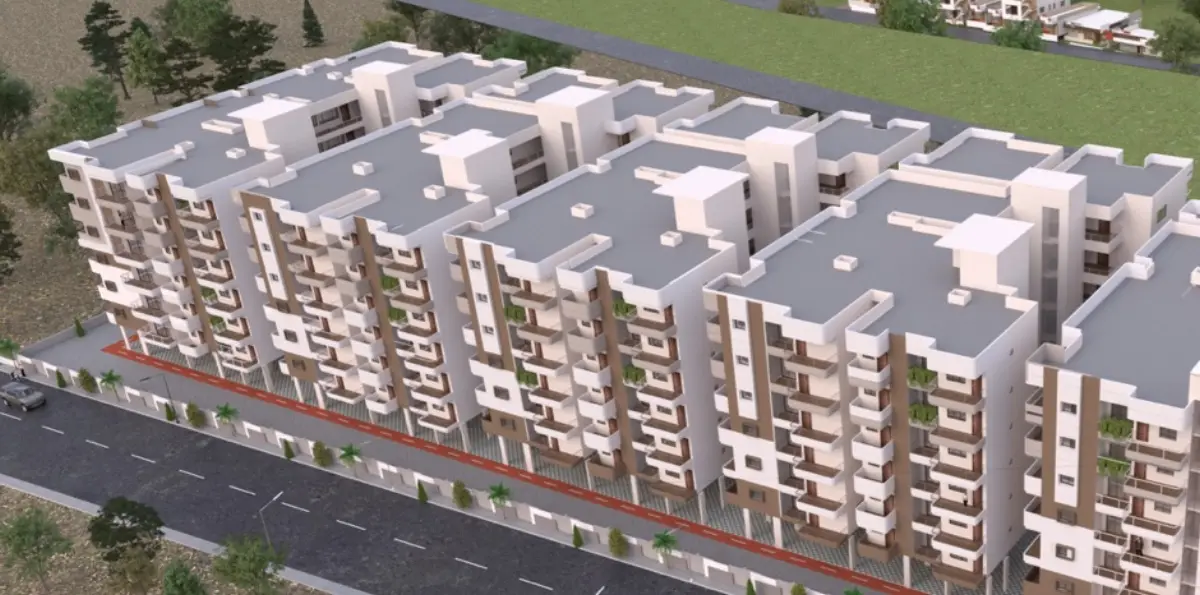
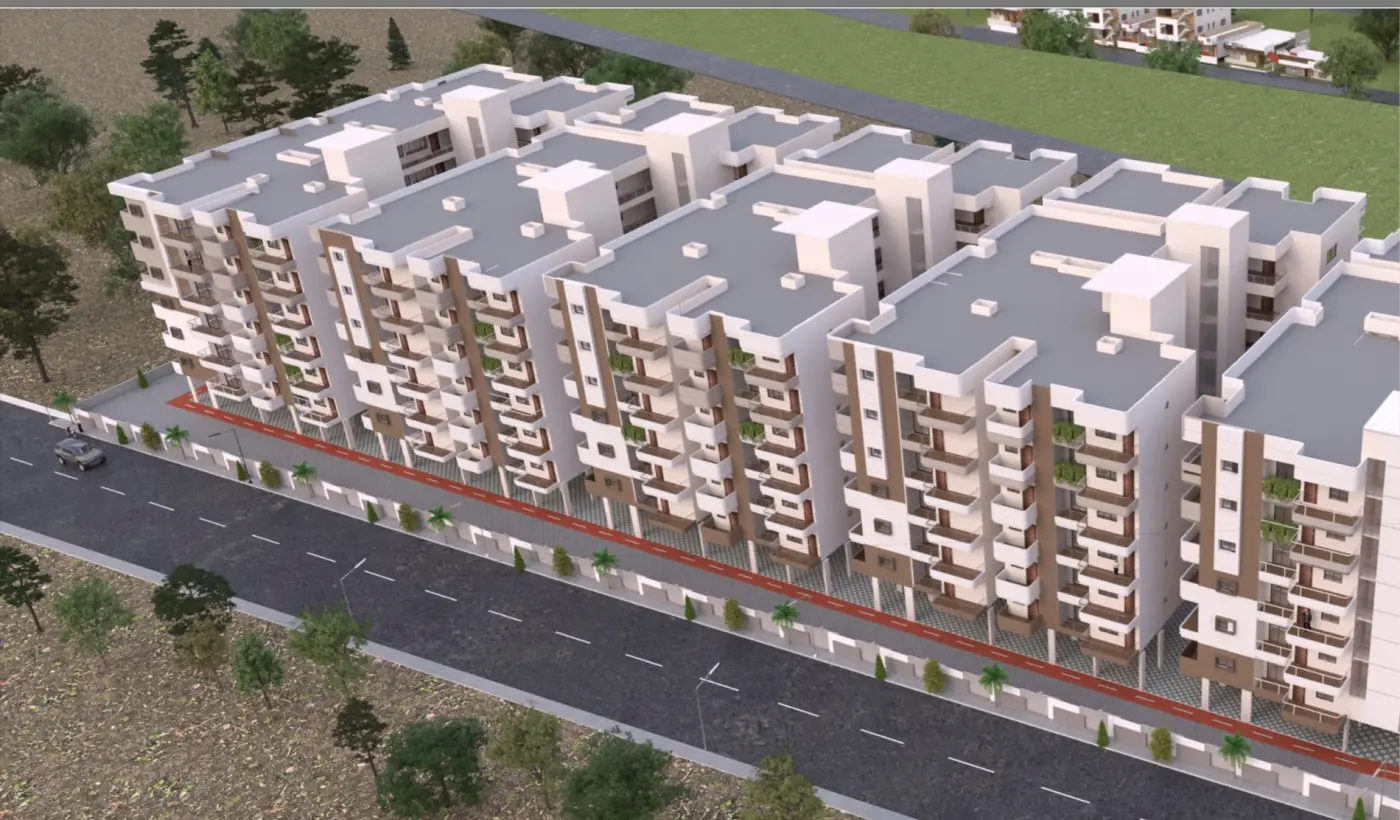
Most new homes in and around Hubballi (Hubli) and Dharwad stand on land that was once farmland. Before a house, a layout of plots or an apartment building can legally go up on it, that land has to be diverted from agricultural to non-agricultural use. In Karnataka this is called land conversion, or "DC conversion", because the Deputy Commissioner of the district has traditionally granted it.
The process was rewritten between 2023 and 2025 to make it faster and largely online. This guide explains how it works now, why it matters even if you are buying a flat rather than land, and how to check the conversion papers. It is general information, not legal advice.
What conversion is and where the rule comes from
Section 95 of the Karnataka Land Revenue Act, 1964 governs the use of agricultural land. An occupant may put up farm buildings and wells for better cultivation, but diverting the land "to any other purpose", such as housing, needs the procedure in section 95(2) (Act extract, LA Bill No. 10 of 2023). Using land without permission is penalised under section 96 (LA Bill No. 24 of 2026, extract), and selling agricultural land for non-agricultural purposes without conversion is an offence under section 192-A.
In the twin cities, conversion sits alongside planning approvals: the Hubballi-Dharwad Urban Development Authority (HDUDA) prepares the master plan that fixes land use, and layouts and buildings need approval from HDUDA or the Hubballi-Dharwad Municipal Corporation (HDMC).
How section 95 works after the 2023-25 changes
| Land | What the law now says |
|---|---|
| Inside an area with a published master plan, and the intended use matches it | No permission from the Deputy Commissioner. The owner pays the prescribed fee to the town planning authority with a self-declaration when taking the building or layout permissions |
| Outside a published master plan | Application with an affidavit to the Deputy Commissioner. Other departments must give their opinion within 15 days, or are deemed to have no objection. If the DC does not decide within 30 days, approval is deemed granted and certified on payment of the fee |
| Up to 2 acres used for a new industry | No conversion needed, under a 2025 amendment Bill passed by the Assembly |
| Renewable energy projects | Exempt from conversion on payment of the prescribed fee, under the same Bill |
The first two rows come from section 95(2) as rewritten by the 2023 amendment, which was brought in to allow conversion by self-declaration (Karnataka Land Revenue (Amendment) Bill, 2023). The last two come from the Karnataka Land Reforms and Certain Other Law (Amendment) Bill, 2025, which the Assembly passed in August 2025 (FoxMandal, 14 August 2025). The same Bill replaced the jail term for selling unconverted farmland for non-agricultural use with a penalty of ₹1 lakh.
The 2025 rules: online and time-bound
The procedure was put into rules by the Karnataka Land Revenue (Amendment) Rules, 2025, notified on 17 September 2025. According to a Cyril Amarchand Mangaldas note of November 2025, the rules:
- move applications online and issue digitally signed conversion certificates;
- require a notarised affidavit in the prescribed forms (21B and 21C);
- ask for the RTC (pahani), mutation register extracts, a pre-conversion sketch, the khata for land inside a local body, and the relevant master plan extract;
- let the planning authority verify, collect the fee and issue the certificate for land that fits the master plan;
- provide penalties for breaches, including cancellation, forfeiture of the fee and fines of up to ₹1 lakh plus ₹2,500 a day, recorded as encumbrances on the RTC.
In April 2026 the Revenue Commissioner notified the new procedure with effect from 23 December 2025: if a Deputy Commissioner does not decide an affidavit-based application within 30 working days, the land moves to the applicant's login for payment and the software generates the conversion order automatically (Star of Mysore, 24 April 2026). The Revenue Minister had told the Legislative Council in December 2025 that conversion applications can now be filed online (Star of Mysore, 11 December 2025).
Note the small difference: the Act speaks of 30 days, while the 2026 notice was reported as 30 working days. Ask the DC's office which period applies to a pending application.
If you are buying from Bengaluru, be aware that in 2026 the state also removed the separate conversion step in specified cases within the Greater Bengaluru area, where land is treated as converted as part of the building or layout approval (King Stubb & Kasiva, May 2026). That change was described for Bengaluru; do not assume it covers Hubballi-Dharwad.
Why it matters if you are buying a flat
An apartment is only as sound as the land under it. If the land was never properly converted, the building plan should not have been sanctioned, and every later approval, from the OC to the e-khata, rests on a weak base. Your advocate's title report should therefore include:
- the conversion order or certificate for every survey number in the project land;
- proof that the use allowed (residential) matches the building;
- the sanctioned plan, which should come after the conversion; and
- the RTC entries showing the conversion.
Banks run the same check before approving a project. The Registration (Karnataka Amendment) Bill passed in August 2025 also lists the conversion order among the documents without which a transfer is to be refused. Our property documents checklist shows where conversion fits among the other papers.
Why it matters even more for a plot
With a plot, you are buying the land itself, so conversion and an approved layout are everything. A site in an unapproved or unconverted layout may be cheap, but you may not get a building plan, an A-khata or a home loan. Our pillar guide to plots in Hubli covers the other checks.
For NRIs there is a further rule. Under RBI's Master Direction on immovable property, an NRI or OCI may buy any immovable property in India other than agricultural land, a plantation or a farm house (paragraph 3.1.1, RBI Master Direction). So an NRI should buy only after conversion is complete, not on the promise that it will follow.
Worked example: a cheap plot on unconverted land
Say a seller on the edge of Hubballi offers a 30 x 40 ft site at ₹24 lakh, while sites in a converted, HDUDA-approved layout nearby cost ₹30 lakh. The ₹6 lakh gap looks attractive until you list what the cheaper site may lack:
| Unconverted site at ₹24 lakh | Converted, approved site at ₹30 lakh | |
|---|---|---|
| Building plan | Cannot be sanctioned until converted | Can be applied for |
| Home loan | Banks generally decline | Possible |
| Penalty risk | Seller faces ₹1 lakh for selling unconverted land; breaches of the conversion rules can draw fines of up to ₹1 lakh plus ₹2,500 a day | None |
| Who must fix it | You, if the seller does not | Already done |
If a breach continued for 100 days, the fine alone could reach ₹1 lakh plus ₹2.5 lakh, or ₹3.5 lakh, before any conversion fee. The figures for the sites are illustrative; the penalties are those in the 2025 Bill and rules described above.
How to check a conversion order
- Ask for a copy of the conversion order or the digitally signed conversion certificate, and the fee receipt.
- Match the survey number, hissa number, extent, owner's name and permitted use with the sale deed or agreement.
- Download the RTC for the survey number and check that it reflects the conversion; see our RTC and pahani guide.
- Check the dates: conversion first, then the layout or building approval.
- For a deemed conversion, ask for the certificate issued after the fee was paid. A pending application is not a conversion.
- Have your advocate confirm the order with the Deputy Commissioner's office as part of the title verification.
Sources
- The Karnataka Land Revenue (Amendment) Bill, 2023 (LA Bill No. 10 of 2023), with extract of section 95 — Karnataka Legislative Assembly (via PRS Legislative Research), accessed 26 November 2026
- The Karnataka Land Reforms and Certain Other Law (Amendment) Bill, 2025 (LA Bill No. 51 of 2025) — Karnataka Legislative Assembly (via PRS Legislative Research), accessed 26 November 2026
- Karnataka eases land conversion rules, modernises property registration — FoxMandal, accessed 26 November 2026
- Karnataka Land Revenue Rules Amendment, 2025: redefining land governance — Cyril Amarchand Mangaldas, accessed 26 November 2026
- Amended Karnataka Land Revenue Act 1964: Revenue Directorate notifies auto conversion of lands if DCs fail to act — Star of Mysore, accessed 26 November 2026
- Land conversion process to be made easy: Revenue Minister — Star of Mysore, accessed 26 November 2026
- Karnataka removes land conversion requirement in GBA — King Stubb & Kasiva, accessed 26 November 2026
- The Karnataka Land Revenue (Amendment) Bill, 2026 (LA Bill No. 24 of 2026), with extract of section 96 — Karnataka Legislative Assembly (via PRS Legislative Research), accessed 26 November 2026
- Master Direction – Acquisition or Transfer of Immovable Property under FEMA, 1999 — Reserve Bank of India, accessed 26 November 2026
Written by the Shriya Properties team in Hubballi and checked against the sources above on 26 November 2026. Rules, rates and prices change — confirm the current figures before you decide. Spotted something out of date? Tell us.
Questions buyers ask
What is DC conversion in Karnataka?
It is permission to use agricultural land for a non-agricultural purpose such as housing, under section 95 of the Karnataka Land Revenue Act, 1964. It is called DC conversion because the Deputy Commissioner of the district grants it where permission is needed.
How long does land conversion take in Karnataka now?
Outside master plan areas, departments have 15 days to give their opinion and the Deputy Commissioner 30 days to decide, after which approval is deemed granted on payment of the fee. The April 2026 notice was reported as 30 working days.
Is conversion needed for land in a master plan area?
Not as a separate DC permission, if the intended use matches the published master plan. The owner pays the prescribed fee to the town planning authority with a self-declaration when taking building or layout permissions.
Can an NRI buy agricultural land in Karnataka?
No. Under RBI rules an NRI or OCI may buy immovable property in India other than agricultural land, plantation property or a farm house. Buy only land that has already been converted.
How do I check if land is converted in Karnataka?
Get a copy of the conversion order or certificate and the fee receipt, match the survey number and extent with the sale documents, check the RTC for the survey number, and have your advocate confirm it with the DC’s office.