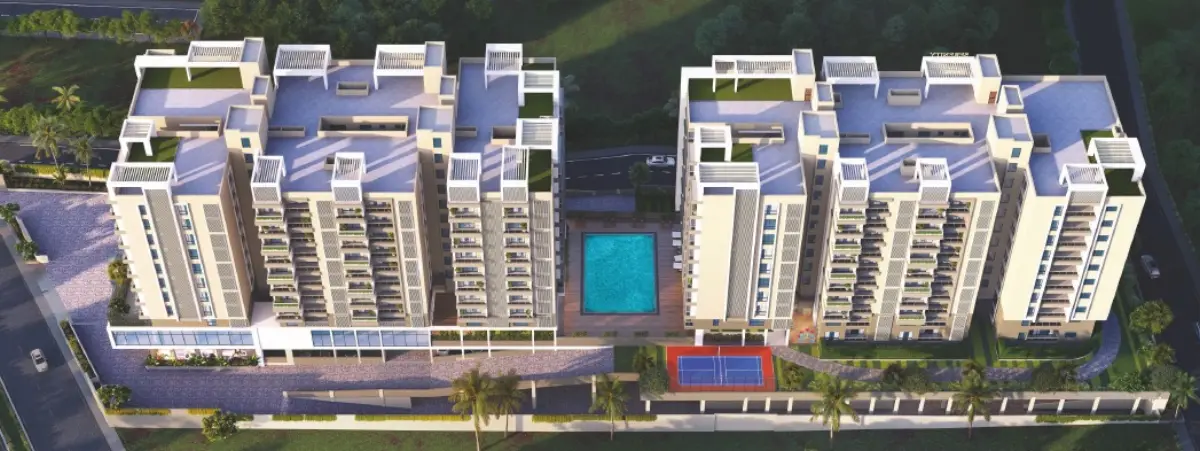
If you work in the Gulf, the US or Singapore and want a flat in Hubballi (Hubli) or Dharwad, you do not have to pay the whole price from savings. Indian banks and housing finance companies lend to NRIs and persons of Indian origin on largely the same terms as to residents, with a few extra rules about where the money comes from and who signs for you. This guide covers those rules as they stand in November 2026.
For the full buying process, read our NRI guide to buying in Hubballi first.
What the RBI allows
The Reserve Bank of India's master direction on rupee lending to NRIs, updated in September 2026, sets the frame (RBI master direction, para 4):
- Who can lend: a bank, or a housing finance company approved by the National Housing Bank.
- What for: buying a residential home in India.
- Terms: the loan amount, margin and repayment period are at par with loans to residents.
- Security: an equitable mortgage of the flat, plus other Indian assets if the lender wants.
- Where the money goes: the loan cannot be credited to your NRE, FCNR(B) or NRNR account; it is meant for the purchase.
- How you repay: remittances from abroad, your NRE, FCNR(B), NRO or other non-resident account, rent from the flat, or a relative in India paying into your loan account.
The loan must also respect the RBI's caps on loan to value, which apply to every home loan (RBI, Commercial Banks – Credit Facilities Directions, 2025):
| Loan amount | Maximum loan as share of property value | Your margin |
|---|---|---|
| Up to ₹30 lakh | 90% | 10% |
| Above ₹30 lakh, up to ₹75 lakh | 80% | 20% |
| Above ₹75 lakh | 75% | 25% |
Stamp duty and registration are left out of the property value, except for homes costing up to ₹10 lakh, so you pay them from your own money. Our down payment and LTV guide explains the arithmetic.
Who qualifies: three banks compared
Each bank sets its own eligibility. Here is what three lenders publish for NRI borrowers:
| ICICI Bank | Canara Bank | Indian Bank | |
|---|---|---|---|
| Age | 21 to 65, or retirement age at maturity | 21 to 60 | Up to 50 when applying, 60 at the end of the loan |
| Work abroad | 1 year salaried; 3 years in business if self-employed | 2 years abroad and NRI status for 3 years | 2 years of confirmed service, 3 years left on the contract |
| Minimum income | USD 42,000 a year (AED 84,000 in the Gulf) | Not stated | Not stated |
| Loan size | On assessment | 4 times annual gross income | 60 times gross monthly income, leaving 40% take-home |
| Longest tenure | 30 years | 30 years or age 60 | 20 years |
Sources: ICICI Bank, Canara Bank (page dated April 2026) and Indian Bank (updated July 2026). Canara also accepts a resident spouse or close relative as a joint applicant and asks for a resident guarantor; ICICI accepts both NRIs and residents as co-applicants. Interest rates are linked to the repo rate at ICICI, and none of the three pages prints a figure, so ask for a written quote.
Documents
Banks ask for the same basics plus proof of your life abroad. Expect:
- Identity and status: passport with visa or residence permit, OCI or PIO proof where relevant, and PAN (ICICI).
- Income: salary slips or a salary certificate, an employment contract or work permit, and overseas bank statements showing salary credits, three to six months depending on the bank.
- Overseas credit report: ICICI asks for one, not older than 45 days, if you live in countries such as the USA, UK, UAE, Canada or Singapore.
- Attestation: Indian Bank wants overseas documents attested by the Indian embassy or a notary of that country; Canara wants the salary certificate attested by the embassy or the employer.
- Property papers: Canara lists title deeds and an encumbrance certificate for 13 years, the khata extract, tax receipts and approved plans. In Hubballi-Dharwad that means the HDMC e-khata and, for a new project, its Karnataka RERA registration.
Our home loan documents checklist has the full list for salaried and self-employed borrowers.
The power of attorney
Banks need someone in India to sign the loan agreement and mortgage papers if you cannot fly in. Their demands differ:
- Indian Bank asks for a general irrevocable power of attorney that includes the power to create a mortgage, stamped, notarised or attested at an Indian embassy or consulate, and adjudicated in India before the loan is sanctioned.
- Canara Bank asks for a notarised power of attorney if a third party will execute the documents.
- ICICI Bank allows disbursement through a power of attorney.
Ask the bank for its format before you sign anything abroad, so one document covers both the loan and the registration at the Hubballi or Dharwad sub-registrar. Our power of attorney guide explains stamping in Karnataka.
Repaying, and why the source matters
ICICI collects EMIs only from your NRE or NRO account; Canara takes them by mandate from remittances, NRE or FCNR(B) transfers, or local funds from close relatives. For a flat under construction, Canara starts EMIs within two months of completion or 36 months after the first disbursement, whichever is earlier, so ask how interest is charged on the amount drawn before then.
Where the EMIs come from matters years later. When you sell, the RBI lets the bank send the proceeds abroad if the flat was paid for in foreign exchange, and it treats loan repayments made from abroad or from your NRE or FCNR(B) account as foreign exchange (RBI master direction on property, para 8.2). Repay from NRO or rental income and that part follows the slower USD 1 million route; see repatriating sale proceeds.
Both Canara and ICICI say they charge no prepayment penalty on floating-rate home loans.
Worked example: a ₹90 lakh flat in Hubballi
Say a couple in Dubai books a ₹90 lakh 3 BHK in an under-construction project in Hubballi.
| Amount | |
|---|---|
| Loan at 80% (falls in the ₹30–75 lakh band) | ₹72,00,000 |
| Their margin, paid in stages to the builder | ₹18,00,000 |
| Stamp duty, cess, surcharge and 2% registration (about 7.6%) | ₹6,84,000 |
| EMI over 20 years at an assumed 8.5% | about ₹62,483 a month |
| Gross income Canara would want at 4 times | ₹18 lakh a year |
The 7.6% is Karnataka's 5% stamp duty with cess and surcharge plus the registration fee, which doubled to 2% from 31 August 2025 (Star of Mysore). Canara's processing fee is 0.5% of the loan, at least ₹1,500 and at most ₹10,000 plus GST, and the bank is waiving it from 1 October to 31 December 2026. Because the builder is a resident and the price is above ₹50 lakh, the couple must also deduct 1% TDS from each payment to the builder, ₹90,000 in all, as our NRI guide explains. Run your own figures on the EMI calculator.
Before you apply
- Check that the project is one your bank will finance; banks verify title and approvals themselves.
- Keep your NRE account funded for EMIs if you may want to take sale money out later.
- Get the bank's power of attorney format before you visit the consulate.
- Compare the full cost: rate, processing fee, insurance and any charges for legal and technical checks.
This is general information, not financial advice. Bank terms change often; confirm the current ones with the lender before you book.
Sources
- Master Direction – Borrowing and Lending transactions in Indian Rupee between Persons Resident in India and NRIs/PIOs (updated 8 September 2026) — Reserve Bank of India, accessed 26 November 2026
- Reserve Bank of India (Commercial Banks – Credit Facilities) Directions, 2025 (updated 1 October 2026) — Reserve Bank of India, accessed 26 November 2026
- Master Direction – Acquisition or Transfer of Immovable Property under FEMA, 1999 — Reserve Bank of India, accessed 26 November 2026
- NRI Home Loan — ICICI Bank, accessed 26 November 2026
- Home loan for NRIs — Canara Bank, accessed 26 November 2026
- NRI Home Loan — Indian Bank, accessed 26 November 2026
- Property registration fee increased from 1% to 2% of overall value (30 Aug 2025) — Star of Mysore, accessed 26 November 2026
Written by the Shriya Properties team in Hubballi and checked against the sources above on 26 November 2026. Rules, rates and prices change — confirm the current figures before you decide. Spotted something out of date? Tell us.
Questions buyers ask
Can an NRI get a home loan in India?
Yes. The RBI allows banks and NHB-approved housing finance companies to lend to NRIs and PIOs for a home in India, with the loan amount, margin and tenure at par with loans to residents.
How much home loan can an NRI get?
Up to 90% of the property value for loans up to ₹30 lakh, 80% up to ₹75 lakh and 75% above that, subject to income. Canara Bank, for example, lends up to 4 times annual gross income.
Can I repay my NRI home loan from my NRO account?
Yes. The RBI allows repayment from NRE, FCNR(B) or NRO accounts, remittances from abroad, rent from the property, or a relative in India paying into the loan account.
Do I need a power of attorney for an NRI home loan?
Usually, if you will not be in India to sign. Banks differ: Indian Bank wants a general irrevocable PoA with power to mortgage, attested and adjudicated in India; Canara wants a notarised PoA.
What is the maximum tenure of an NRI home loan?
It depends on the bank and your age: ICICI Bank offers up to 30 years, Canara Bank up to 30 years or age 60, and Indian Bank up to 20 years.