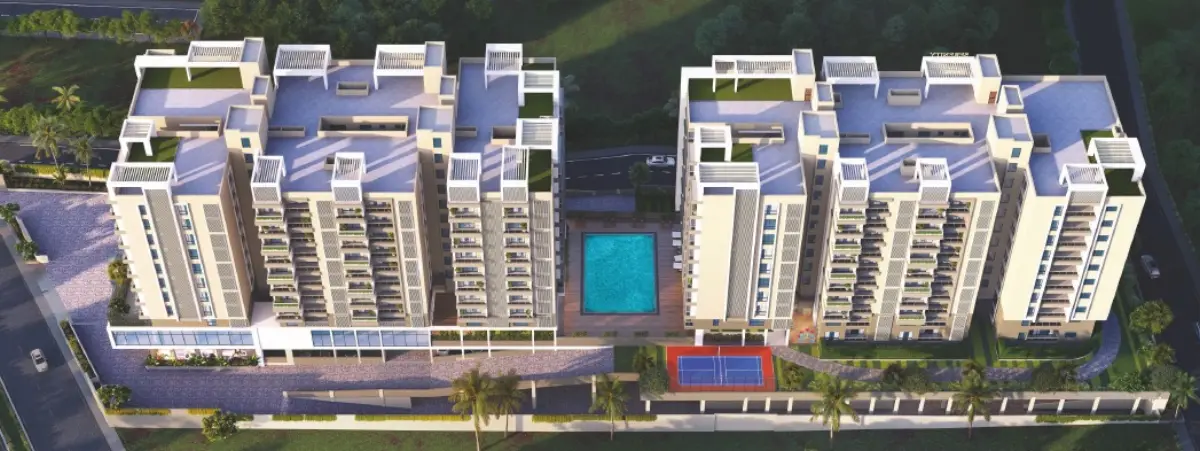
How much a bank will lend you is the lower of two numbers. The first is what your income can repay, after your other EMIs. The second is a share of the flat's value, fixed by RBI rules. A family in Hubballi (Hubli) with a good salary can still be held back by the second limit, and a family buying a modest flat can be held back by the first.
This guide explains both, plus the age, credit score and co-applicant rules that move them. The figures use banks' published criteria as seen in November 2026 and an illustrative interest rate of 8.5%.
Limit 1: what your income can carry (FOIR)
Banks use the fixed obligation to income ratio (FOIR): your existing EMIs and other fixed commitments, plus the new home loan EMI, as a share of your monthly income. Kotak Mahindra Bank advises keeping FOIR at or below 50% for a higher loan, and caps it at 40% for retired applicants (Kotak). Another Kotak guide says banks usually want FOIR between 40% and 60%, including the new EMI (Kotak). Each lender sets its own figure.
The EMI room left over decides the loan. At 8.5% a year, each ₹1 lakh of loan costs roughly:
| Tenure | EMI per ₹1 lakh |
|---|---|
| 15 years | ₹985 |
| 20 years | ₹868 |
| 25 years | ₹805 |
| 30 years | ₹769 |
Divide the EMI you can afford by the figure for your tenure, and multiply by ₹1 lakh. Our EMI calculator does the same sum at any rate.
Worked example: a salaried buyer in Hubballi
Say Ravi is 32, works in Hubballi and takes home ₹80,000 a month. He pays ₹8,000 a month on a car loan.
- At a 50% FOIR, all his EMIs together can be ₹40,000.
- The car loan uses ₹8,000, which leaves ₹32,000 for the home loan.
- Over 20 years at 8.5%, ₹32,000 supports a loan of about ₹36.9 lakh (32,000 ÷ 868 × 1 lakh).
How the answer moves:
| Change | Home loan EMI room | Loan he can get |
|---|---|---|
| As above, 20 years | ₹32,000 | about ₹36.9 lakh |
| Stretch to 25 years | ₹32,000 | about ₹39.7 lakh |
| Close the car loan first, 20 years | ₹40,000 | about ₹46.1 lakh |
| Lender uses a 40% FOIR, 20 years | ₹24,000 | about ₹27.7 lakh |
Closing a small loan before applying raises eligibility far more than stretching the tenure. A longer tenure also costs much more interest; our EMI guide shows how much.
Limit 2: age and tenure
The loan has to end before the lender's age limit, so your age caps the tenure, and the tenure caps the loan. Published limits in November 2026:
| Lender | Age rule | Maximum tenure |
|---|---|---|
| HDFC Bank | 21 to 60 for salaried, 21 to 65 for self-employed (FAQ) | 30 years or retirement age, whichever is lower |
| ICICI Bank | 18 to 65 salaried, 18 to 70 self-employed, at the time of applying | Up to 30 years |
| Axis Bank | Over 21, and not above 65 or retirement age when the loan ends | Not given on its eligibility page |
| Bank of Baroda | At least 21; the loan cannot run past retirement or age 65, whichever is earlier | 30 years |
Sources: HDFC Bank, ICICI Bank, Axis Bank, Bank of Baroda. HDFC's eligibility table also shows an 18 to 70 range, so confirm the limit that applies to you.
Example. If Ravi were 45 and due to retire at 60, he could borrow for 15 years at most. The same ₹32,000 EMI then supports about ₹32.5 lakh instead of ₹36.9 lakh. Buyers in their forties often add a younger earning co-applicant or plan a larger down payment for this reason.
Limit 3: the value of the flat
Even if your income supports a big loan, RBI rules cap the loan as a share of the property's value: up to 90% for loans up to ₹30 lakh, 80% for loans above ₹30 lakh and up to ₹75 lakh, and 75% above ₹75 lakh, with stamp duty and registration left out of the cost (RBI, Commercial Banks – Credit Facilities Directions, 2025). The bank also uses its own valuation, not just the price you agreed.
So if Ravi closes his car loan and qualifies for ₹46.1 lakh on income, he still needs a flat valued at about ₹57.6 lakh or more to borrow all of it at 80%. Our guide to down payment and LTV works through this in detail.
Credit score
Kotak says you need a credit score of 700 or above for a home loan, whatever your income, and ICICI Bank uses the same 700 floor for its balance transfer offer. A higher score usually earns a better rate as well as approval. Axis Bank's advice is to review your finances six to twelve months before applying, improve your score and avoid making several loan applications at once (Axis Bank).
Before you apply, pull your credit report, check that closed loans show as closed, and pay down credit card balances.
If you are self-employed
Banks assess business owners on income shown in tax returns, not on turnover. Kotak says self-employed applicants are assessed on the average of their last three years' returns. A strong year after two weak ones therefore lifts eligibility less than you might expect. Banks also treat professionals and other business owners differently: Kotak asks non-professionals for 12 months of bank statements against 6 for professionals, and HDFC Bank's processing fee for self-employed non-professionals is up to 1.50% against up to 0.50% for professionals. See the documents each needs in our home loan documents checklist.
Adding a co-applicant
A co-applicant's income is added to yours, and so are their EMIs. Suppose Ravi's wife takes home ₹45,000 and has no loans. Their combined ₹1,25,000 at 50% gives ₹62,500 of EMI room; after the car loan, ₹54,500 supports about ₹62.8 lakh over 20 years, against ₹36.9 lakh for Ravi alone. HDFC Bank notes that all co-owners must be co-applicants, and that co-applicants are generally close family members. Our guide to the joint home loan covers ownership, tax and the risks.
Ways to raise your eligibility
- Close or prepay small loans and credit card dues before you apply.
- Add an earning co-applicant who will also be a co-owner.
- Choose a longer tenure only if you plan to prepay later.
- Save a larger down payment, which also lowers the bank's risk.
- Ask for an in-principle sanction first. Bank of Baroda's pre-approved home loan gives an eligible amount before you pick a flat; Axis notes that a pre-approval does not guarantee final approval.
This is general information, not financial advice. Each bank's own assessment decides your final loan amount.
Sources
- Home loan eligibility: how it is determined — Kotak Mahindra Bank, accessed 26 November 2026
- 7 home loan strategies for first-time homebuyers — Kotak Mahindra Bank, accessed 26 November 2026
- Home Loan — eligibility, tenure and FAQs — HDFC Bank, accessed 26 November 2026
- Home Loan — ICICI Bank, accessed 26 November 2026
- Home Loan Balance Transfer — ICICI Bank, accessed 26 November 2026
- Home Loan eligibility and documentation — Axis Bank, accessed 26 November 2026
- How do banks decide your home loan eligibility — Axis Bank, accessed 26 November 2026
- Baroda Home Loan — Bank of Baroda, accessed 26 November 2026
- Reserve Bank of India (Commercial Banks – Credit Facilities) Directions, 2025 — Reserve Bank of India, accessed 26 November 2026
Written by the Shriya Properties team in Hubballi and checked against the sources above on 26 November 2026. Rules, rates and prices change — confirm the current figures before you decide. Spotted something out of date? Tell us.
Questions buyers ask
How much home loan can I get on a ₹50,000 salary?
If the bank allows half your income for EMIs and you have no other loans, ₹25,000 a month supports about ₹28.8 lakh over 20 years at 8.5%, or about ₹31 lakh over 25 years. Actual amounts depend on the lender’s FOIR, your age and the flat’s value.
What is FOIR in a home loan?
The fixed obligation to income ratio: all your EMIs, including the new home loan, as a share of monthly income. Kotak suggests keeping it at or below 50%, and says banks usually want 40% to 60%.
What is the maximum age to get a home loan?
It varies by lender. Bank of Baroda requires the loan to end by retirement or age 65, whichever is earlier; ICICI Bank accepts salaried applicants up to 65 and self-employed up to 70 at the time of applying.
What CIBIL score do I need for a home loan?
Kotak says a score of 700 or above is needed for a home loan. A higher score usually also gets you a lower interest rate.
Does adding my spouse as co-applicant increase my home loan eligibility?
Yes, if your spouse has an income. Banks add both incomes and deduct both sets of EMIs, which can raise the loan substantially. All co-owners usually have to be co-applicants.